
The Laurentian Escarpment Community Trails could become Northern Ontario’s first mapped adaptive mountain biking trail network following a two-day assessment held in late October 2026 by a team of adaptive mountain bike riders and their support.
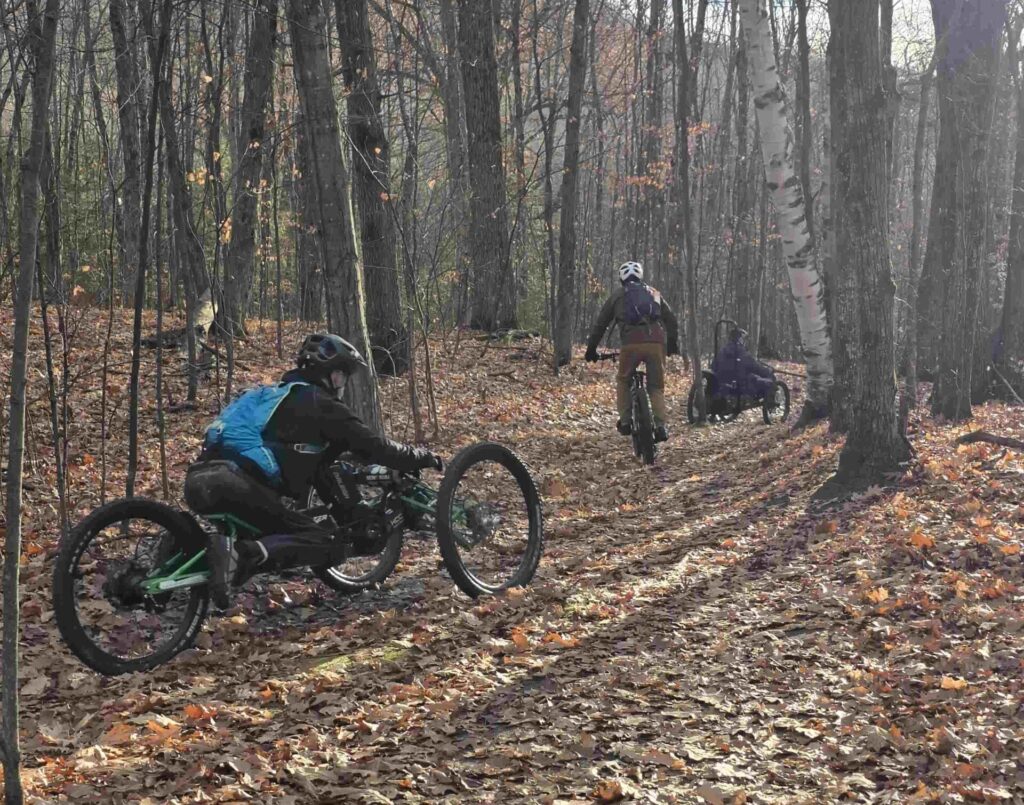
A partnership between Discovery Routes and the North Bay Mountain Bike Association, the assessment brought together three adaptive riders with different mobility impairments, each using specialized mountain bikes designed to meet their individual needs. The goal was to evaluate the trails and determine what minor modifications could help welcome more riders to the network.
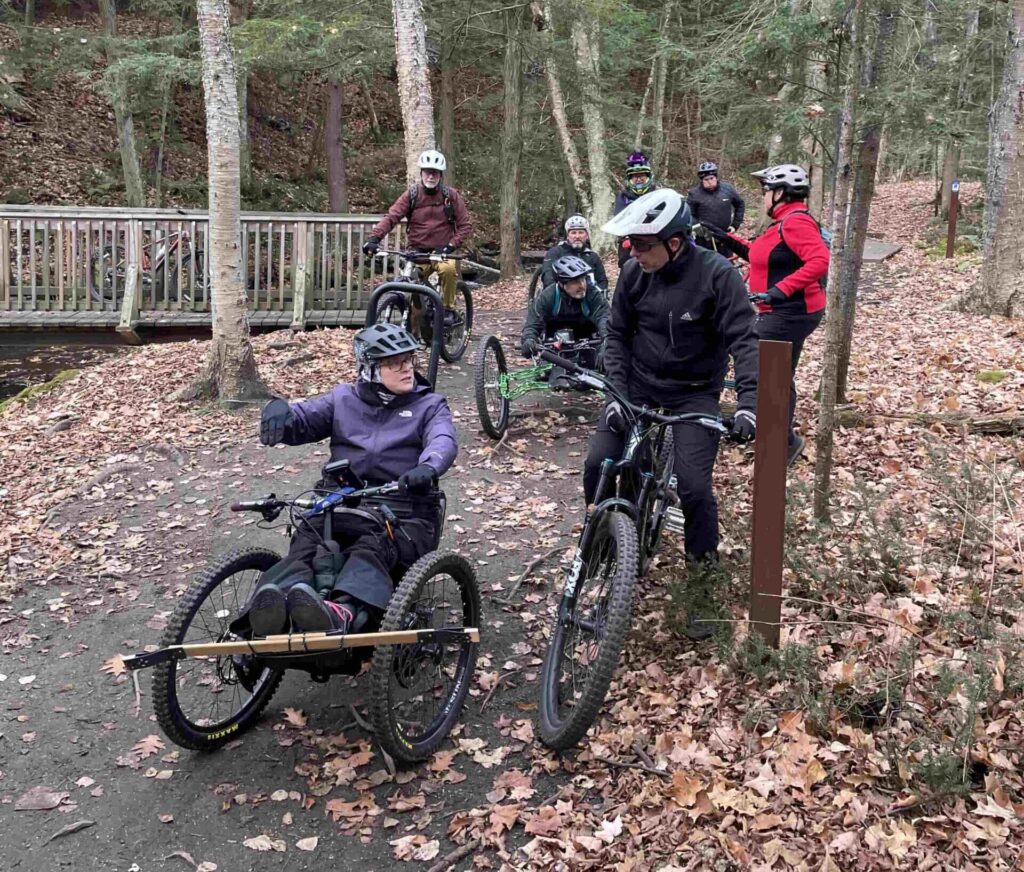
Jen Gadoua, aMTB assessment lead with Brent Bull, NBMBA volunteer trail builder
The assessment was led by Jen Gadoua of Kitchener, an adaptive mountain bike instructor and advocate who hosted Ontario’s first adaptive mountain bike camp in 2025. The team also included Sudbury’s Jake Thomas, a “legend” in the adaptive mountain biking community and director of the feature-length documentary Adaptation. Local rider, Kevin McKenna, a celebrated para-cyclist who made the switch to adaptive mountain biking when introduced to the sport through the Handcycling Club of Canada, rounded out the team. Each adaptive rider was accompanied by a support rider, with volunteers from the North Bay Mountain Bike Association joining the assessment to experience the trails alongside the riders and gain firsthand insight into their suitability and potential improvements.
The Laurentian Escarpment Community Trails will remain a multi-use trail network, continuing to welcome hikers, mountain bikers and other trail users. The assessment is about expanding the range of people who can enjoy the trails by welcoming adaptive mountain bikers as another user group, while preserving the natural terrain and character of the existing trail system. The preliminary findings are encouraging. The Laurentian Escarpment trails are already well suited to adaptive mountain biking, with relatively few barriers requiring attention.
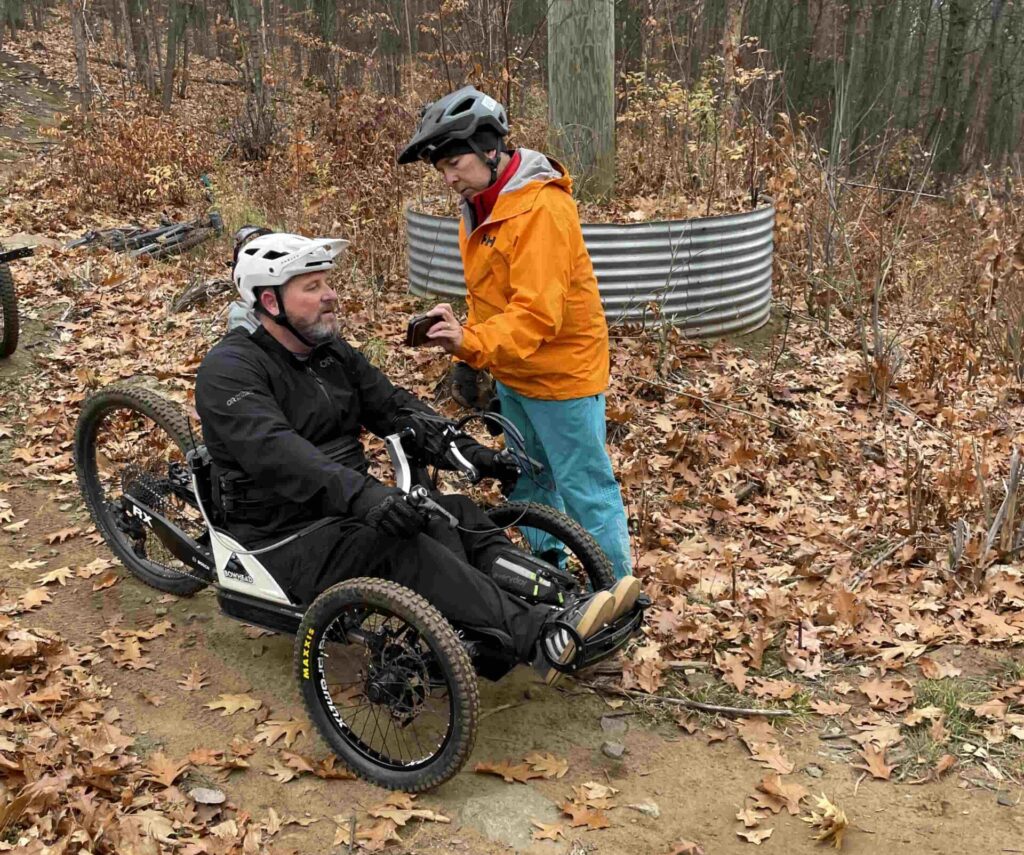
Kevin reviewing upcoming trail obstacle
“This trail system is actually quite adaptive-friendly without significant modifications,” says Jen. “We didn’t run into very many pinch points, even with our wider adaptive bikes, which can measure up to 38.6 inches. We’re not looking to turn these trails into smooth, wide stroller paths. Adaptive riders want to experience technical terrain and the challenges of mountain biking, too. Sometimes, making a trail more adaptive-friendly can be as simple as moving a rock that’s creating an obstacle.”
Over the two days, riders assessed trail features, including off-camber sections, narrow boardwalks and areas that could present tipping risks for three-wheeled bikes. The resulting information will help North Bay Mountain Bike Association volunteers identify and complete minor trail improvements.
For Kevin, the opportunity represents more than trail modifications. “An adaptive mountain bike allows me to stay active, challenge myself, and explore places I otherwise couldn’t access. It gives me greater freedom and independence while helping me continue discovering what’s possible and connecting with the mountain biking community.”
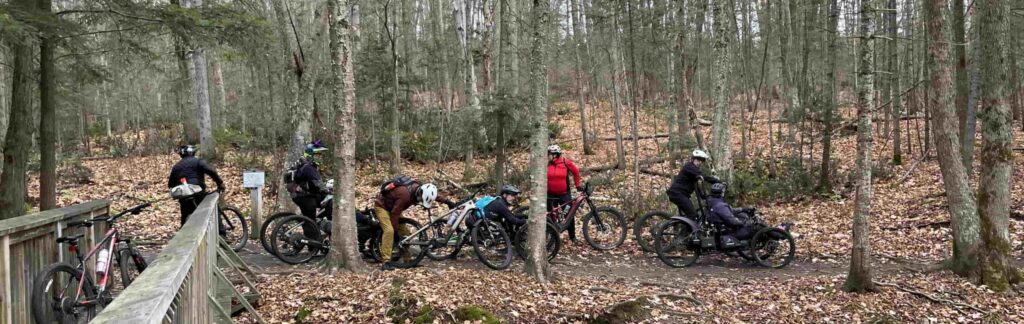
aMTB Assessment Team in action